
How to Organize Your Kids' Closet for the School Year
Reviewed by: Lisa Greene Smith, Founder, Simplify Studio Professional Organizing Last updated: September 2026. Serving families in Raleigh, North Carolina
The fastest way to calmer school mornings often isn't a new routine or an earlier alarm. It's a closet that finally works for your child.
A well-organized kids' closet works because it's built around how your child actually lives: their height, their habits, and the way your family moves through a school morning. When clothes, shoes, and school gear each have a clear, reachable home, getting dressed stops being a negotiation. Mornings move faster, everyday decisions get simpler, and your child can start doing more on their own. That last part matters more than most parents expect, and it's the reason a thoughtful closet reset is worth doing before the school-year rhythm sets in.
TL;DR
A kids' closet works best when it's organized around your child's height, routine, and abilities, not around adult habits.
Start every school-year reset with an honest edit for size and season, since kids outgrow clothes faster than closets fill up.
Simple, reachable zones make it possible for children to dress and pack themselves, which reduces morning decision fatigue for everyone.
Systems only last when a child can maintain them, so keep them intuitive rather than elaborate.
A professional organizer helps Raleigh families design closets that stay functional as kids grow and schedules change.
Why we're often asked this in Raleigh
At Simplify Studio, a lot of our early-fall work with Raleigh families starts in the same place: a child's closet that made sense a year ago and doesn't anymore. Kids grow, seasons shift, and the systems that once fit quietly fall out of step with real life.
Our approach comes from an interior design background, which means we don't treat a kids' closet as a storage problem to solve with more bins. We look at how the space functions and how it feels, then design something that supports your child's independence and holds up to daily use. The goal isn't a closet that photographs well for one afternoon. It's one that still works in November.
Why the school year is the right time to reset
Summer is forgiving. Schedules are loose, and a disorganized closet rarely causes real friction. The school year is different. Suddenly there's a clock, a bus, and a growing list of things that need to leave the house on time.
A reset before the routine hardens does two things. It clears out what no longer fits or belongs, and it gives you a chance to design around the mornings you're about to have rather than the ones you just finished. It's far easier to build a good system in early September than to fight a cluttered one every day through spring.
If you're resetting your child's bedroom at the same time, it helps to think of the closet and the room as one connected space. (See our related guide on the Raleigh kids' room reset for how the two work together.)
Start with an honest edit
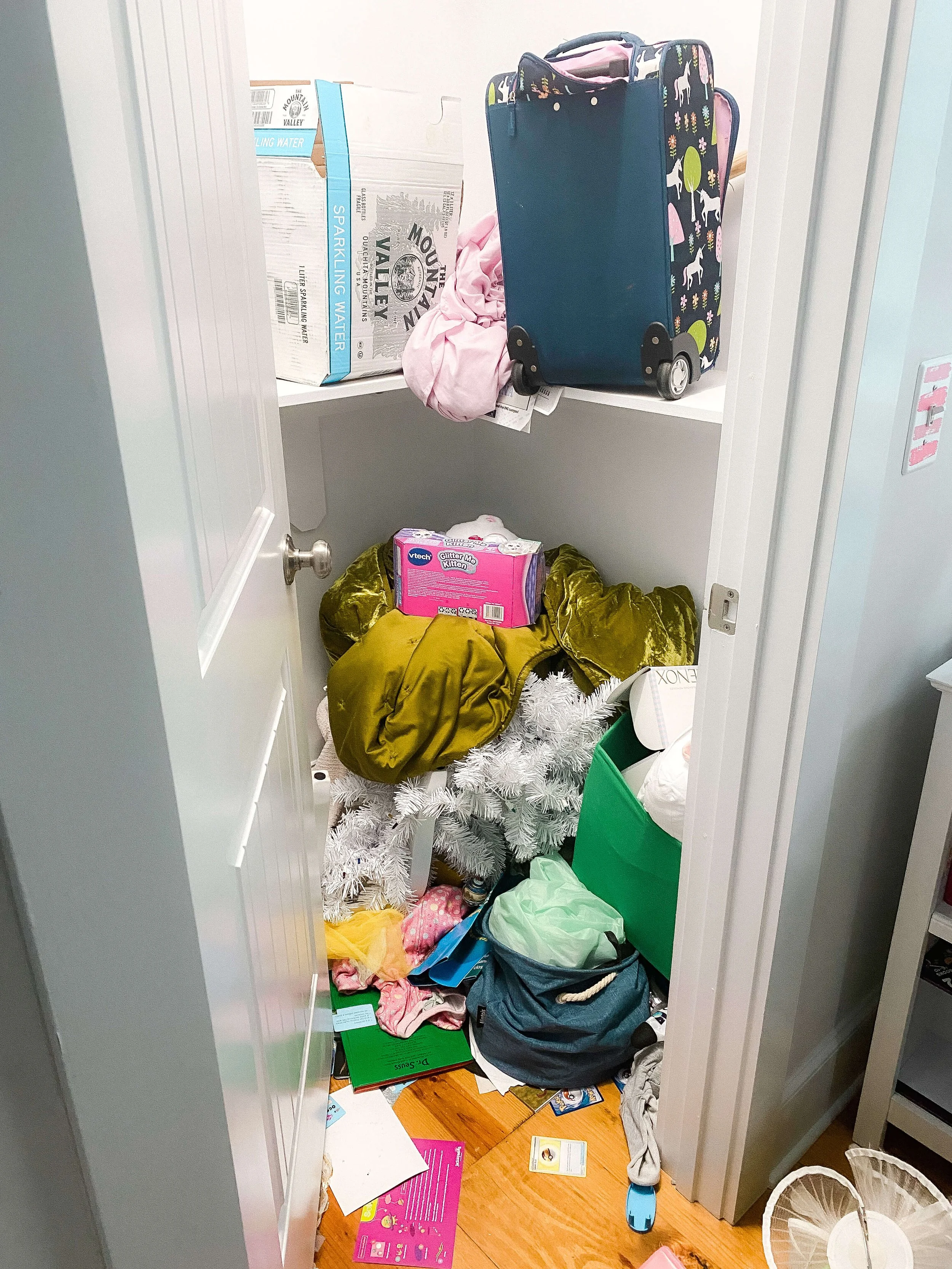
Every good closet begins with editing, and kids' closets need it more than most. Children outgrow clothing quickly, and a closet can quietly fill with sizes that haven't fit in months.
Before organizing anything, work through what's actually there:
Sizes that no longer fit
Off-season clothing that can be stored elsewhere
Items that are worn out or rarely worn
School uniforms or activity gear that needs its own spot
Editing isn't about being ruthless. It's about making room for the clothes your child actually wears so those pieces are easy to see and easy to reach. When a closet only holds what fits and belongs, everything downstream gets simpler.
Organize around your child, not around adults
This is where most kids' closets quietly fail. They're arranged at adult height, with the everyday items your child needs tucked above where they can comfortably reach.
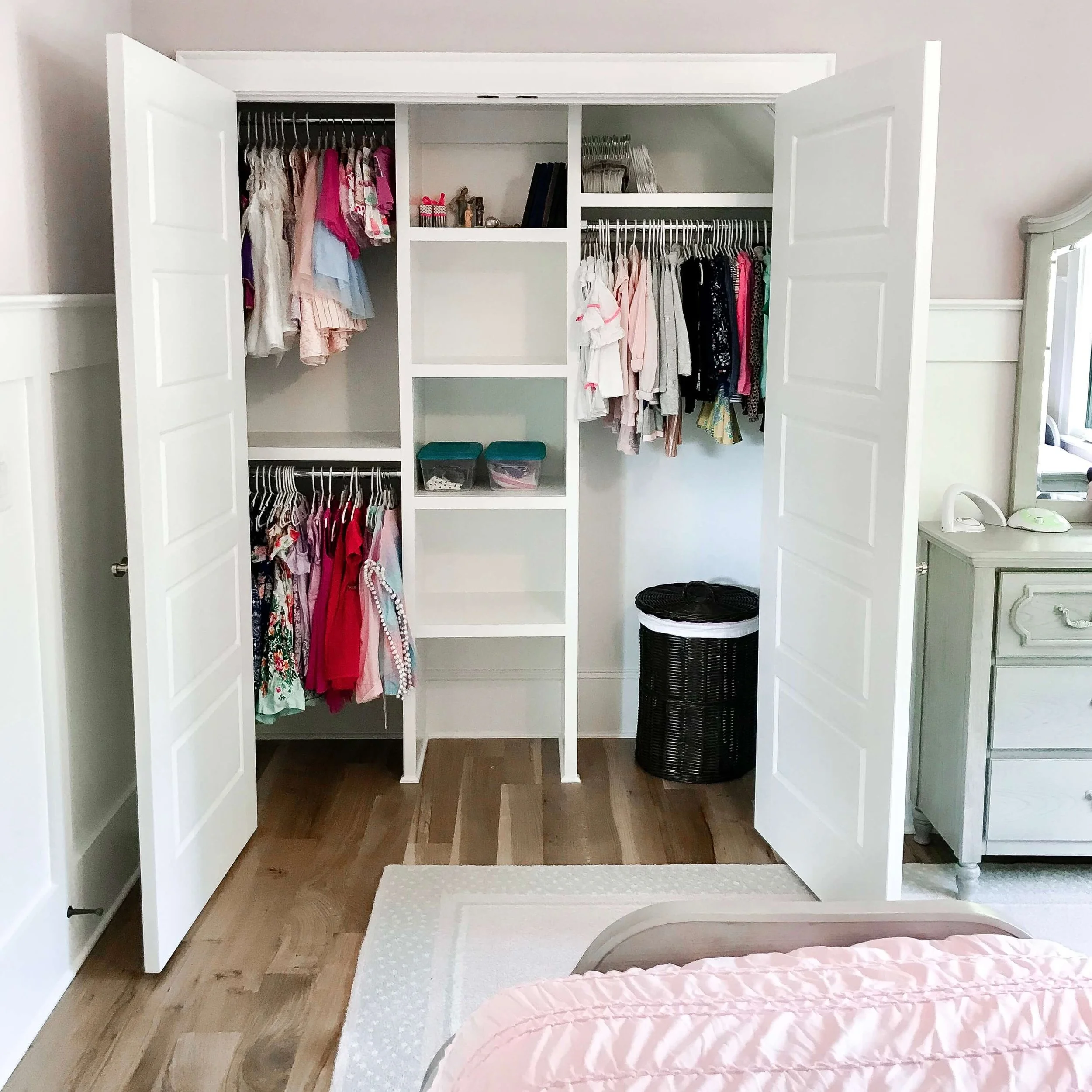
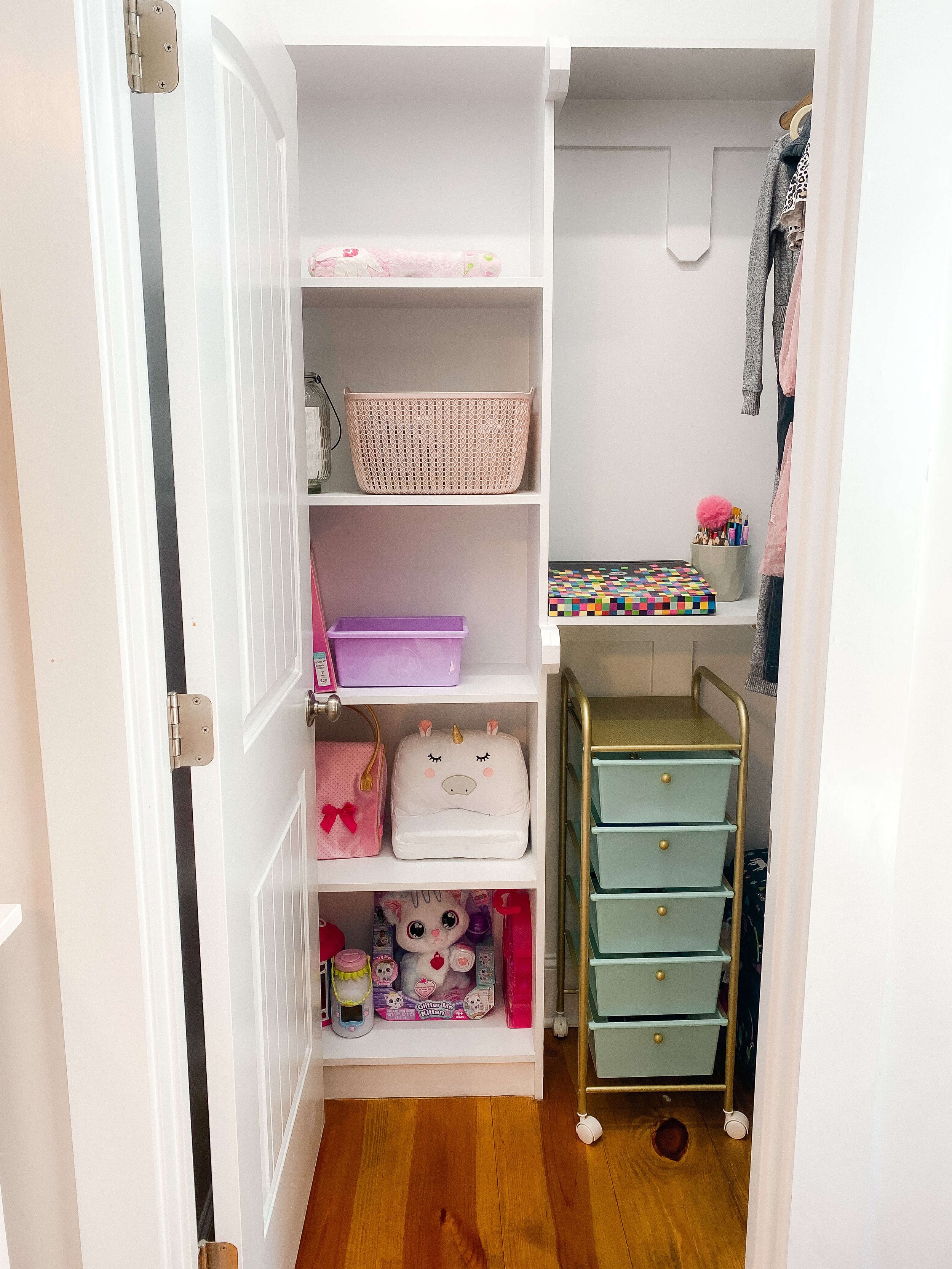
We design kids' closets in zones built for the child who uses them:
Frequently worn clothing at your child's eye level and within arm's reach
Shoes stored low and easy to grab
Backpacks and school bags in a consistent, reliable spot
Special-occasion or rarely used items higher up, where adults can help
When the things a child needs most are the things they can reach most easily, they stop asking for help with every small task. That independence is the whole point.
Build a simple morning system
Decision fatigue is real, and it doesn't only affect adults. Researchers who study decision-making have long observed that a steady stream of small choices early in the day drains mental energy before the day has truly started. For a child standing in front of a full closet at 7 a.m., "what do I wear" can be one decision too many.
A few thoughtful systems remove that resistance:
A simple spot for planning outfits ahead, whether that's a small section of the closet or a set of labeled bins for the week
A consistent home for the next-day essentials, so backpacks and shoes aren't a scavenger hunt
Clear, low labeling so your child knows where everything goes without being told
None of this has to be elaborate. In fact, the simpler it is, the more likely it survives a busy week.
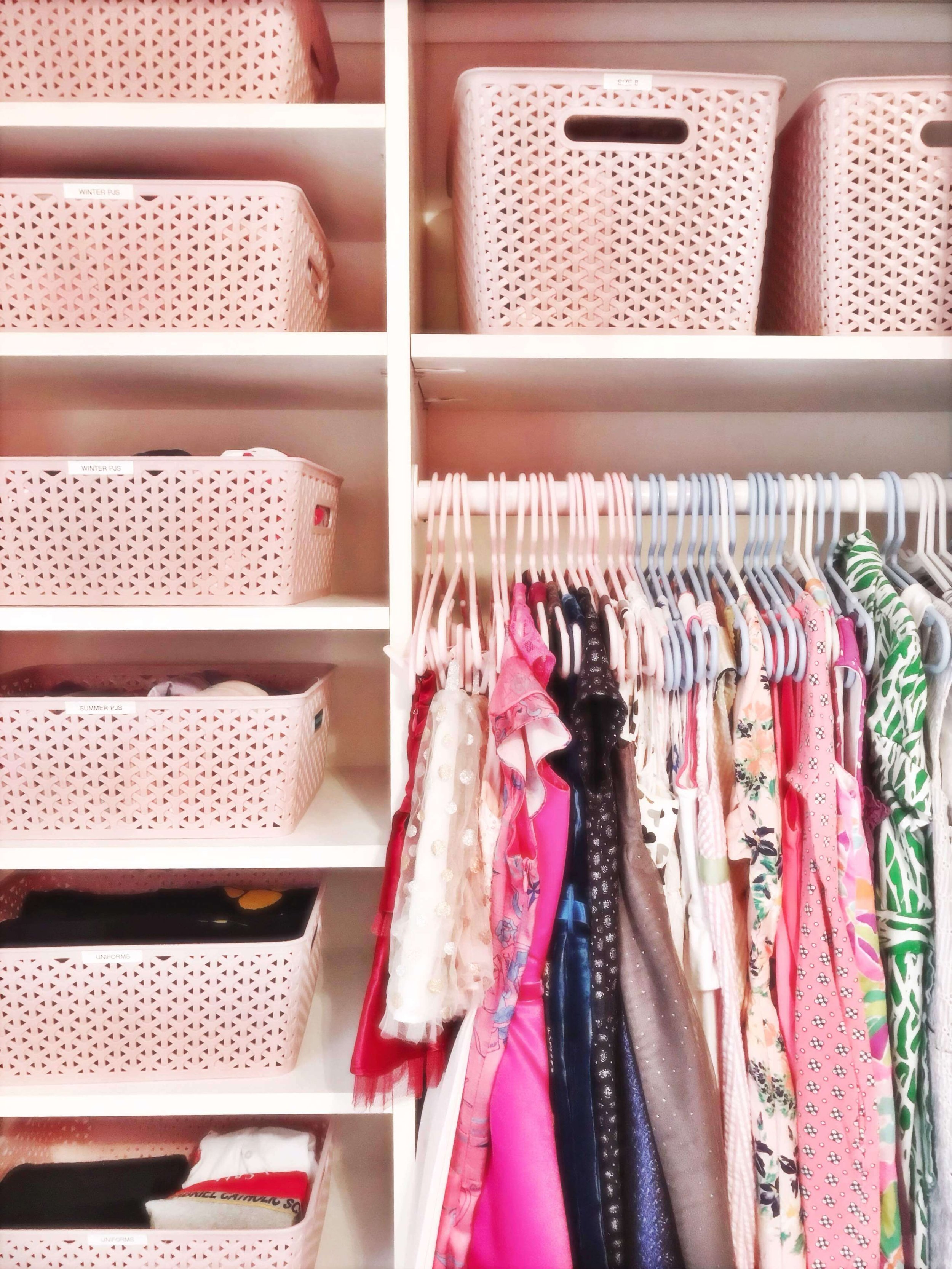
Make it a space kids can maintain
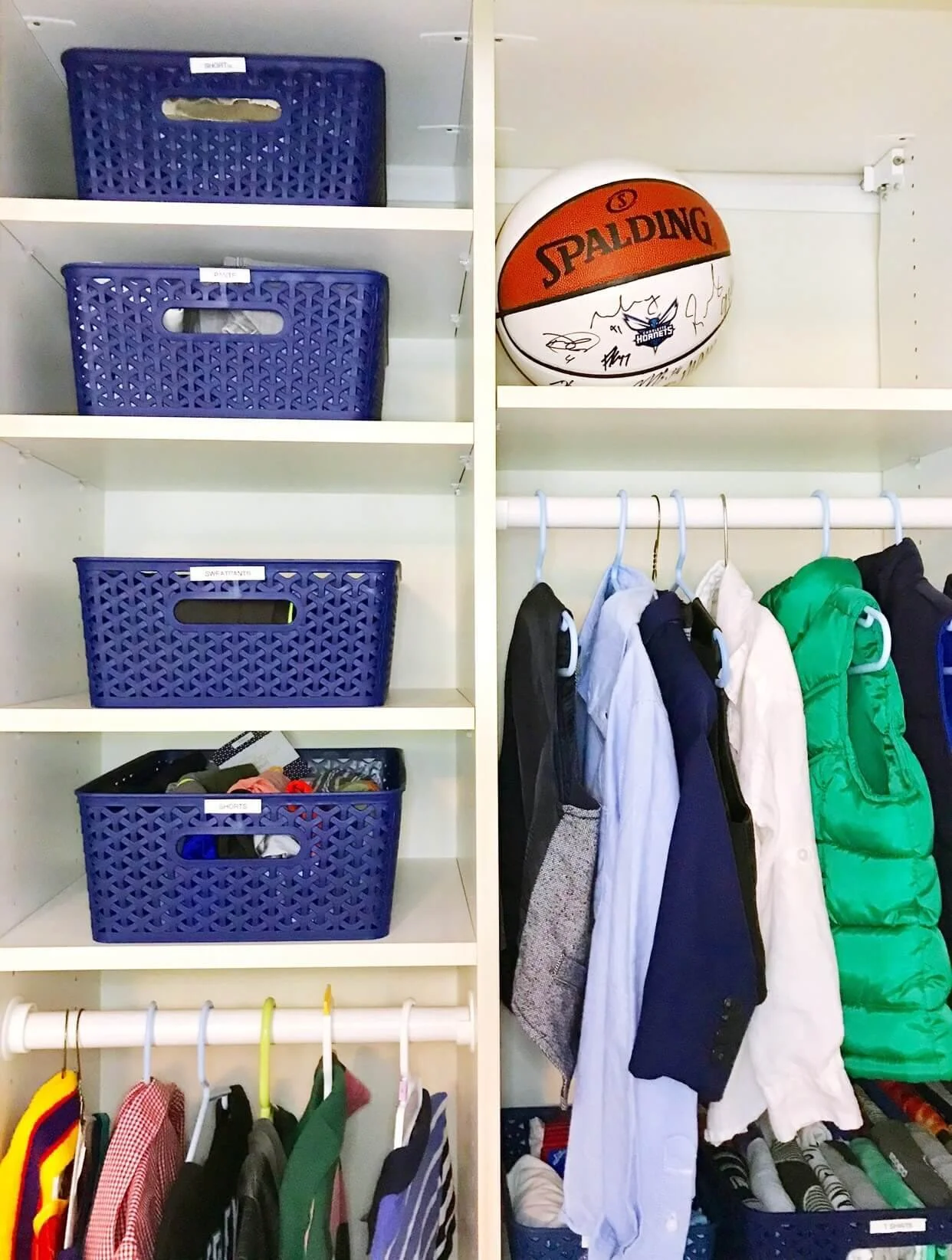
A closet is only organized for as long as it stays that way, and a child can't maintain a system built for an adult. The best kids' closets are intuitive enough that putting things away is nearly automatic.
That means fewer categories, clearly defined homes for each item, and containers a child can actually use. When a system matches your child's abilities, maintenance stops being a battle and becomes part of the routine. Just as importantly, kids feel a real sense of pride in a space they can manage themselves.
What changes when you work with a professional organizer
Plenty of parents can tidy a closet. What's harder is designing one that stays functional as a child grows, seasons change, and schedules shift, all while juggling everything else a school year demands.
As a professional organizer serving Raleigh, NC, we bring an outside perspective, a structured process, and design experience that ties function and beauty together. We help families plan zones that grow with a child, choose solutions suited to the specific closet, and set up systems parents and kids can realistically keep up with. The result is less time spent managing the space and more time for the parts of family life that actually matter.
You can see how this fits into our broader home organizing services, and learn more about how we work with families across the area on our Raleigh page.
Ready for calmer school mornings?
If your child's closet is working against your mornings instead of supporting them, we'd love to help. A thoughtfully designed closet is a small change that makes a noticeable difference in everyday life.
Schedule a consultation with Simplify Studio and let's create a space your child can use, enjoy, and maintain all year long.