
Organize Your Closet For Summer
Updated blog post on 5/13/26.
Learn how to organize your closet for summer with a simple, step-by-step system from a professional organizer in Raleigh, NC. This guide walks you through removing out-of-season clothing, grouping and color-coding summer pieces, editing your wardrobe, and properly storing fall and winter items. You’ll also learn how to reset your closet layout so your in-season clothing is easy to access and maintain. The result is a clutter-free, functional summer wardrobe that makes getting dressed faster, easier, and more enjoyable for everyday life in Raleigh, North Carolina.

Summer Is Here!
When warmer weather arrives, your wardrobe needs naturally shift. Heavy layers, boots, and sweaters no longer serve your daily routine, and continuing to sort through off-season clothing every morning only slows you down.
Taking a little time to complete a summer closet organization refresh can completely change how your mornings feel. Instead of decision fatigue and clutter, you get clarity, ease, and a wardrobe that actually supports your lifestyle.
This process is not about perfection—it’s about function. A well-organized seasonal closet gives you more time, more space, and more ease during the busiest (and often best) months of the year.
Follow these simple, professional organizer-approved steps to transition your closet for summer.

6 Steps to Organize Your Summer Closet

Step 1 — Remove Fall and Winter Clothing
The first step in any successful closet organization system is clearing out what doesn’t belong in the current season.
Start by removing all fall and winter items from your closet, including:
Sweaters and cardigans
Jackets, coats, and outerwear
Scarves, hats, gloves, and cold-weather accessories
Boots and heavier footwear
Thick fabrics like wool or fleece
If it’s not something you will realistically wear in the next three months, it does not need to take up space in your summer closet.
This step alone creates immediate visual relief. When your closet is filled only with seasonally relevant clothing, it becomes significantly easier to see what you have and actually wear it.
The goal here is simple: clear the space so your summer wardrobe can function without interference.
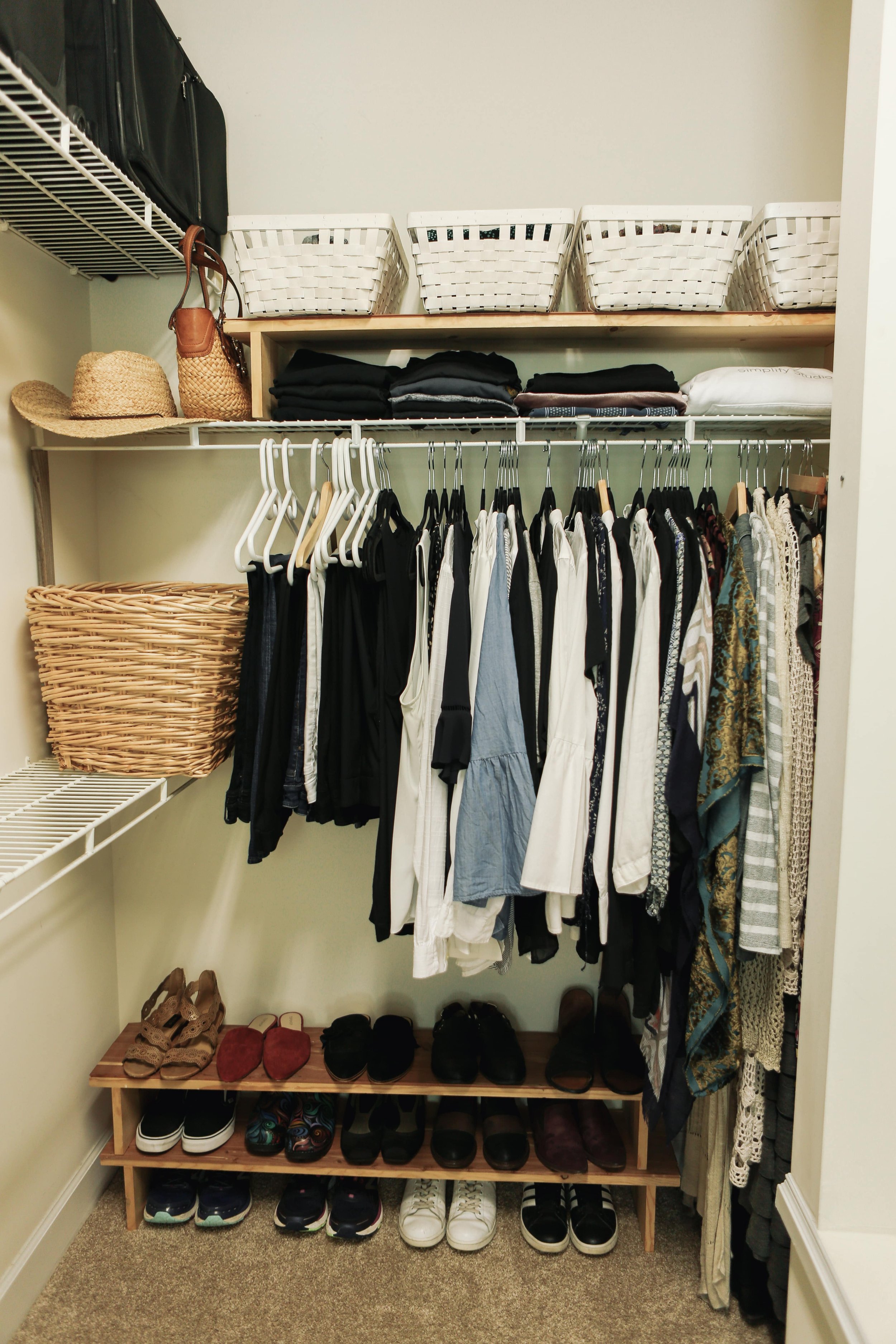
Step 2 — Group Like with Like
Once your closet is cleared, begin building structure through categorization.
Grouping similar items together is one of the most effective closet organization tips because it removes visual chaos and makes outfit selection more intuitive.
Organize your clothing into categories such as:
Pants with pants
Jeans grouped together
Blouses and tops separated by sleeve length if helpful
Short sleeve tops together
Dresses grouped in one section
Skirts together
Lightweight jackets or layers separated
Shoes organized by type (sandals, sneakers, flats, etc.)
This step creates order where there was previously randomness. Instead of scanning your entire closet, your brain can quickly narrow down options within defined categories.
It also naturally reveals duplicates and gaps in your wardrobe, which sets you up perfectly for the next step.

Step 3 — Color Code Your Closet
After grouping by category, take your organization one step further by arranging each section by color.
Color coding is one of the most powerful yet underused strategies in summer closet organization. It improves both function and visual appeal.
Within each category, arrange items in a logical color flow such as:
Whites and creams
Neutrals (beige, tan, gray)
Light pastels
Bright colors
Darker tones
This system does two important things:
First, it makes your closet visually calming. A color-coded wardrobe feels intentional rather than chaotic.
Second, it speeds up outfit selection. When your brain can immediately filter by color, getting dressed becomes faster and more effortless.
Even if you are not a “color-coded person,” trying it in just one section often makes the benefits obvious right away.

Step 4 — Edit Your Summer Wardrobe
Now that everything is visible and organized, it’s time for the most important step: editing.
This is where your closet decluttering process really pays off.
Go through each category and ask simple, honest questions:
Do I actually wear this?
Does it fit my body right now?
Would I buy this again today?
Do I feel good when I wear it?
Has it been sitting unused for over a year?
Be especially aware of:
Duplicate items you don’t need multiples of
Clothes that almost fit but not quite
Pieces you are holding onto “just in case”
Gifts that don’t match your style
Worn-out or outdated items
A helpful rule: if it doesn’t serve your current lifestyle, it doesn’t belong in your current wardrobe.
The goal is not a minimal closet—it’s a functional one. Keep what you love and actually wear, and release the rest.

Step 5 — Clean and Store Off-Season Clothing Properly
Once your summer wardrobe is set, shift focus to storing your fall and winter items properly.
Begin by sorting your off-season clothing into categories again:
Sweaters
Coats and jackets
Cold-weather accessories
Boots and winter shoes
Then go through a second round of editing. There is no point storing items you no longer want or use.
Before storing anything, make sure all items are clean. This is a critical step in seasonal wardrobe storage. Dirt, oils, or stains left untreated can set over time and permanently damage fabrics.
Once clean, store items using materials that protect your clothing:
Use breathable storage bags instead of plastic when possible
Add cedar or natural moth protection for wool and knits
Store shoes in boxes or structured containers to maintain shape
Avoid overcrowding storage so fabrics can stay fresh
Proper storage protects your clothing investment and makes seasonal transitions much easier in the future.
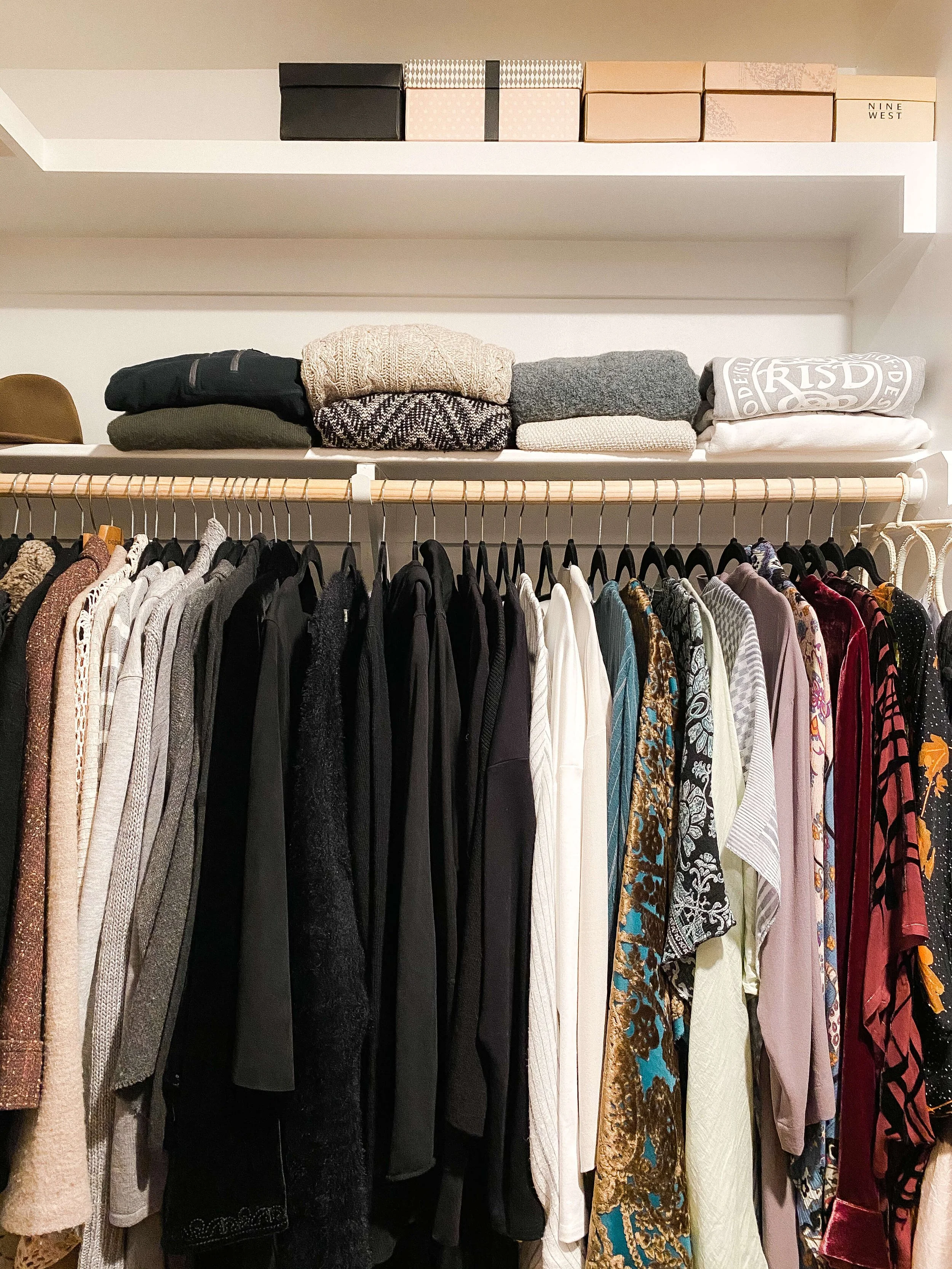
Step 6 — Reset Your Closet for Daily Use
Now it’s time to put everything back in a way that supports your everyday routine.
Your closet should reflect your current season of life—not all seasons at once.
Place your summer wardrobe in the most accessible, visible areas of your closet:
Eye-level hanging space
Front-facing sections
Easy-to-reach drawers or shelves
These are your “high-traffic” pieces—the clothes you will actually wear daily.
Off-season clothing should move to less convenient areas:
Upper shelves
Back corners
Secondary closets if available
Storage bins in guest rooms or office spaces
If you only have one closet, zoning becomes essential. Think of it like real estate:
Prime space = current season clothing
Secondary space = off-season storage
The more intentionally you assign space, the easier your daily routine becomes.
A well-set closet eliminates friction. You should never have to dig through winter sweaters to find a summer tank top.
Why Seasonal Closet Organization Matters
A seasonal closet reset is not just about tidiness—it’s about reducing daily decision fatigue.
When your wardrobe is cluttered or out of season, you spend unnecessary mental energy sorting through items that don’t belong. Over time, that adds stress to something as simple as getting dressed.
A well-organized summer closet:
Speeds up your morning routine
Makes outfit planning easier
Helps you see your true wardrobe clearly
Reduces clutter overwhelm
Encourages you to actually wear what you own
This is less about perfection and more about creating a system that works with your life instead of against it.
Final Thoughts
Organizing your closet for summer does not have to be overwhelming. When broken into simple, intentional steps, it becomes a manageable process that delivers immediate results.
Start with clearing out off-season items, group and simplify what remains, edit thoughtfully, and store what you’re not using in a way that protects it.
The result is a closet that feels lighter, functions better, and makes getting dressed genuinely easier.
A well-organized closet isn’t just visually satisfying—it supports a more peaceful, efficient daily routine.
Ready for a Professionally Organized Closet in Raleigh?
If your closet still feels overwhelming even after trying to organize it on your own, you’re not alone—and you don’t have to keep struggling through it season after season.
Working with a professional organizer in Raleigh, NC can help you create a closet system that is not only visually organized, but also functional for your real daily routine. Instead of temporary cleanups, you get a structure that actually holds up over time.
At Simplify Studio, we specialize in seasonal wardrobe transitions, closet editing, and creating simple, sustainable systems that make getting dressed easier every single day.
Whether you need help decluttering, setting up a seasonal rotation system, or fully redesigning your closet layout, we can help you turn your space into something that truly works for you.
Schedule a consultation with a professional organizer in Raleigh here!